OUR CURRICULUM INTENT

Our Curriculum Intent
Our children feel cherished, celebrated and secure in our setting as individuals.
At Little Learners’ our intention is to provide a broad and ambitious curriculum for our children which gives them the essential knowledge and skills they need to succeed in life.
Our passionate early-years educators have high aspirations for all of our children and we celebrate each child as an individual to build on what they know, as well as providing a breadth of new rich learning opportunities. This prepares children for their next stage of development and education and enables each unique child to achieve their full potential.
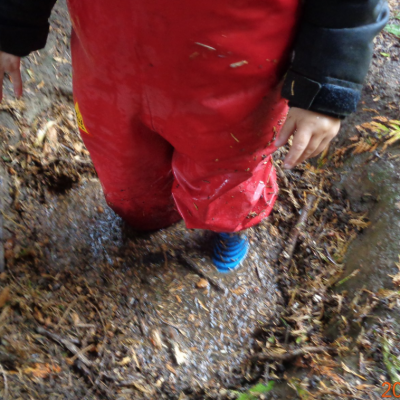
We put the children at the heart of our practice and through our Forest School programme, we intend to promote the holistic development of our children by providing exciting outdoor learning opportunities. We aim to inspire our children to develop a love for learning outdoors and exploring through natural learning which extends beyond the classroom. By adopting this holistic approach we intend to emphasise supporting the emotional wellbeing of our children through strong key person relationships. This enables and nurtures them to become happy, confident, independent and well-rounded individuals who are motivated, enthusiastic and love to learn.
Our Goals
We follow the statutory framework outlined within the Early Years Foundation Stage (EYFS) 2021 and also use the non-statutory guidance to help up shape our curriculum Development Matters (2021) and Birth to Five Matters (2021). We create exciting educational programmes, experiences and learning opportunities so our children can excel across all 7 areas of learning. We consider how our children like to learn and promote the characteristics of effective learning by providing opportunities to promote:
- Playing and exploring
- Active learning
- Creating and thinking critically.
We consider our children’s interests and incorporate these into our activities and learning experiences as we understand that children learn more effectively when interested. We adopt a play-based approach to learning and implement our ambitious curriculum through a mixture of:
- Child-initiated play
- Skilfully planned Adult-led activities and experiences
- In the moment planning
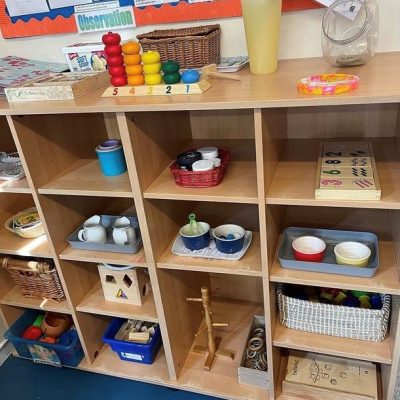
- Montessori-based resources
- An invitation to play
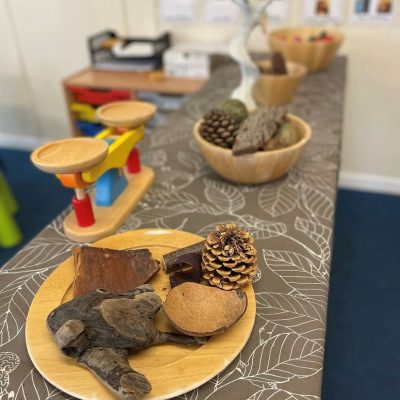
We encourage the use of loose parts and open-ended resources to offer a wider variety of opportunities by allowing children to think critically and creatively to encourage discovery, collaboration, risk taking and movement.
We promote the physical health, mental health and wellbeing of our children by offering opportunities to participate in music and movement. We spend a large portion of the day outdoors in the fresh air where children can access our large gardens and covered canopy. Twice a week we use forest school teaching through outdoor learning to develop their personal, social and emotional development and understanding of the world.
We educate our children on the world around them and actively involve them in our local community including regular walks in the community/parks, visits to local farms, attractions, our Church and we invite visitors in to further develop our cultural capital. We encourage children to develop a ‘love of reading’ and support our children to develop their vocabulary, communication and language through stories, songs, rhymes, phonics and circle times.
Our Children
Our children are highly motivated, curious and enthusiastic learners. They are happy, secure and enjoy their time at Nursery which is ‘home from home’ with a family feel. They have positive attitudes towards play and they have a thirst for learning. They are confident, resilient individuals who have high levels of self-esteem and feel safe and secure. They thrive in social situations and build excellent relationships with their teachers and peers and understand rules and boundaries. They have developed a love of reading and can communicate and use new vocabulary effectively. All children, including those with additional needs thrive and children with Special Educational Needs and Disabilities (SEND), achieve the best possible outcomes. All of our children are fully prepared for their next stage of education including their all-important transition to school.
It takes big hearts to shape little minds 🩷
Bunnies | Hedgehogs | Squirrels | |
Personal, Social and Emotional | Settle with key person when parent leaves.
Form a bond with keyperson.
Become less reliant on comforters during play.
Start to understand the concept of sharing.
| Seek familiar adult when upset.
Use please and thank you when prompted.
Start to share resources with support.
Develop own interests.
Start to recognize similarities and difference. | Become less reliant on keyperson.
Demonstrate good manners independently.
Start to solve own problems/conflict through strategies eg: sandtimer for sharing.
Start to self-regulate with support. |
Communication and Language | Use pointing and some words to communicate
Show recognition of body parts and familiar sounds
Watch adults face as they talk
Listen and respond to simple instruction
Listen to simple stories and understand what is happening with the help of the pictures | Start to use a wider range of words
Understand basic instruction
Start to say how they are feeling with words as well as actions
Understand and act on longer sentences – ‘find your coat’
Understand simple ‘who’, ‘what’ ‘why’ questions | Develop language and social skills to be able to communicate with peers and adults.
Follow more complex instruction with two or three parts.
Join in two-way conversation for many turns
Sing a large repertoire of songs
Use talk to organize themselves and their play with peers
|
Physical Development | Use lidded cup
Co-operate with nappy changing
Begin to feed independently | Drink from an open cup
Show an interest in the potty and vocalise when soiled
Use a spoon and fork to eat
Find their own belongings
Use one-handed tools and equipment | Begin to pour own drinks with care
Develop independent self-care and meet own needs
Use the correct cutlery in the correct manner
Be able to do zips, own shoes, waterproofs etc
Develop correct pencil grip |
Maths | Start to build
Recognise when an object is taken away
Climb and squeeze into different spaces | Place objects inside others
Count, sometimes skipping numbers
Start to recognise and understand positional language
Begin to recognise shapes | Say one number for each object
Develop number recognition
Match the numeral to the quantity
Use mathematical language eg: lots, more, same, bigger etc
Name shapes |
Literacy | Begin to join in with action songs such as ‘Twinkle Twinkle’
Share books with a familiar adult
Enjoy short stories and songs | Show interest in books and sit and listen to a story
Enjoy sharing books with a familiar adult and seek being read to
Start to sing along with group songs
Begin to know the parts of a book | Be able to re-tell familiar stories
Develop some phonetic knowledge
Recognise some letters of their name and recognise their name labels
Recognise some graphemes and phonemes |
Understanding of the World | Explore the natural world around them
Repeat actions that have cause and effect
Begin to recognise living things | Begin Forest School sessions
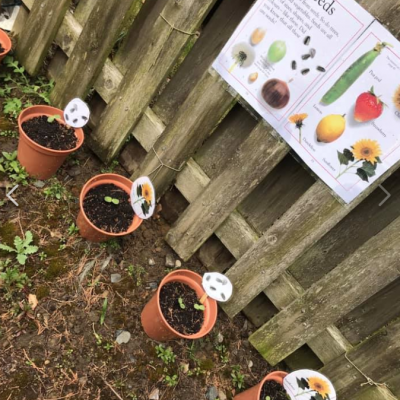
Take part in planting and watering crops and flowers
Notice differences between people | Show care and concern for living things and the world around us
Learn and talk about lifecycles
Understand people have different beliefs and opinions to their own |
Expressive Arts and Design | Be interested in making sounds
Join in with singing time and make some sounds with voice and instruments
Start to make marks intentionally
Begin to role play eg: making drinks in home kitchen | Enjoy mark making and exploring different materials
Explore role-play scenarios
Engage with music and movement and have their own opinions and ideas | Explore different materials to develop own ideas, how to use them and what to make
Begin to build enclosed spaces and shapes using different materials
Take part in singing and karaoke sessions choosing own songs and musical choices |